

Effective pronunciation and intonation are key factors in achieving a high score in the speaking modules of English proficiency tests like IELTS, PTE, OET, TOEFL, CELPIP, and Duolingo. Clear speech, proper stress, and natural rhythm not only make your speech more understandable but also boost your overall fluency.
At Lingua Lab, the best online spoken English institute, we provide specialized training for English proficiency tests, helping you refine your pronunciation and improve fluency for higher scores.
Why Is Pronunciation Important for Speaking Tests?
In exams like IELTS, PTE, OET, TOEFL, CELPIP, and Duolingo, pronunciation is an assessed criterion in the speaking section. Here’s why it matters:
✅ Clarity – Good pronunciation ensures that the examiner or AI understands you clearly.
✅ Fluency – Smooth pronunciation improves the flow of speech.
✅ Confidence – Correct pronunciation makes you sound more natural and confident.
✅ Better Scores – Pronunciation mistakes reduce your band score, especially in IELTS, PTE, and TOEFL.
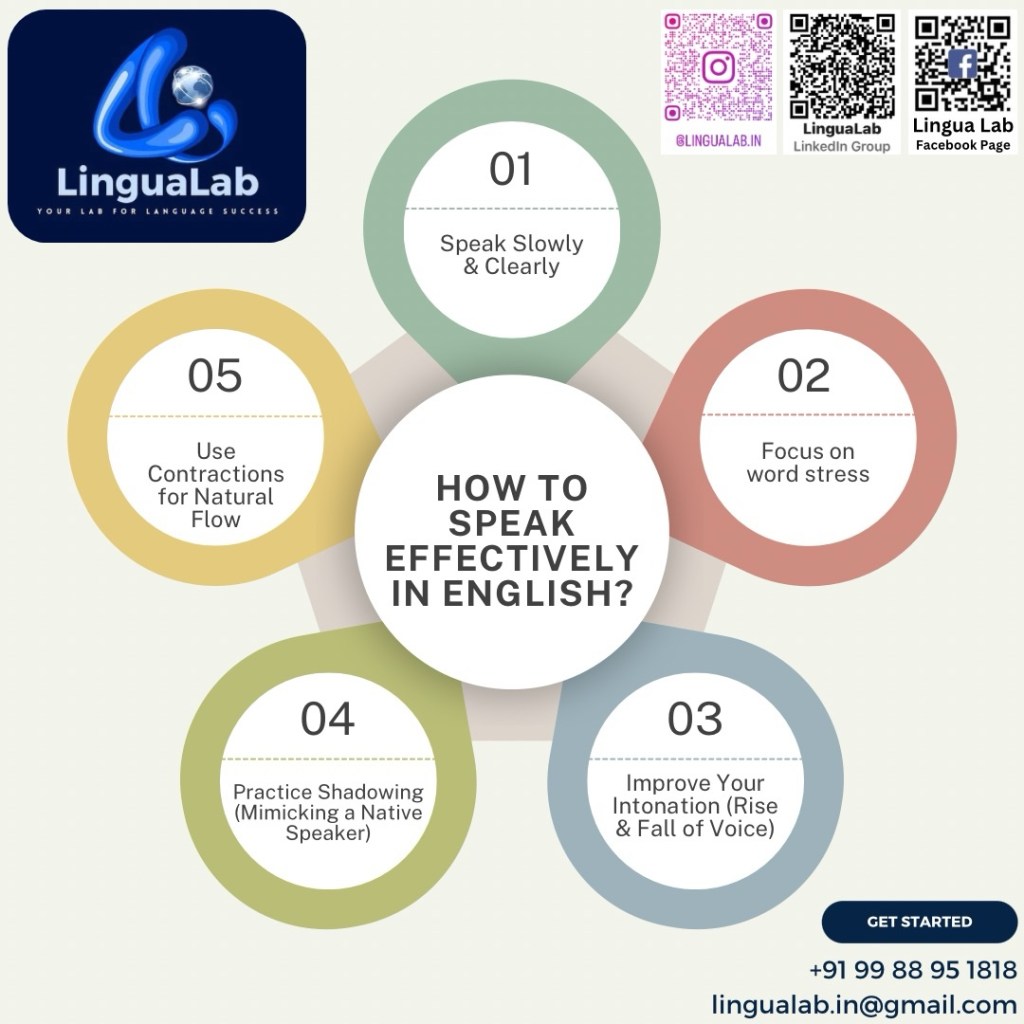
How to Speak Effectively in English?
1. Speak Slowly & Clearly
• Avoid rushing. Take your time to pronounce each word properly.
• Pause between phrases to maintain clarity.
✅ Wrong: “Idunno whatchusayin.”
✅ Right: “I don’t know what you are saying.”
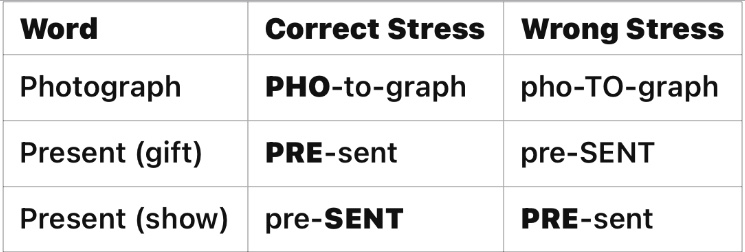
2. Focus on Word Stress
In English, some syllables are stronger (stressed) than others. Incorrect stress changes the meaning of words.
3. Improve Your Intonation (Rise & Fall of Voice)
Intonation refers to the natural rise and fall of your voice.
• Statements: Use a falling tone → “I live in Canada.”
• Yes/No Questions: Use a rising tone → “Do you like pizza?”
• Wh-Questions: Use a falling tone → “Where are you from?”
Breaking Words into Syllables for Better Pronunciation
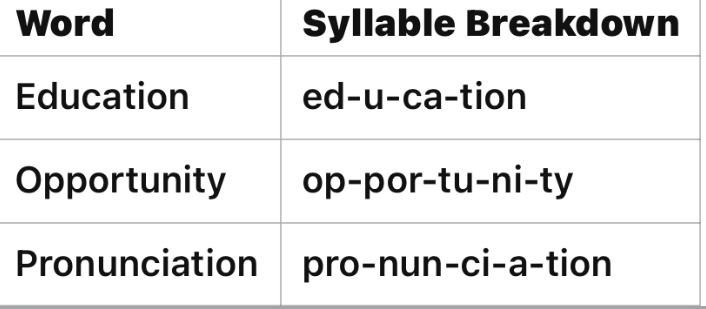
A good technique for clear pronunciation is splitting words into syllables.
Examples:
✅ How to Practice?
1. Clap for each syllable: “Ed-u-ca-tion (4 claps).”
2. Slow down each word before saying it faster.
Fluency: How to Speak English More Naturally?
1. Speak in Thought Groups
Instead of speaking word by word, group words naturally.
✅ Wrong: “I… am… going… to… the… market.”
✅ Right: “I am | going to the market.”
2. Use Contractions for Natural Flow
• Do not → Don’t (I don’t know.)
• Going to → Gonna (I’m gonna call you.)
• Want to → Wanna (I wanna learn English.)
3. Practice Shadowing (Mimicking a Native Speaker)
• Listen to podcasts, movies, or TED Talks.
• Repeat exactly what you hear, matching the speed and tone.
Pronunciation & Fluency Tips for Different Exams
IELTS Speaking Pronunciation Tips
• Use a neutral accent (British or American is not required).
• Speak clearly with pauses between sentences.
• Avoid monotone speech—add some emotion.
✅ Example: “I think it’s an amazing experience.” (Stress on ‘amazing’ to show enthusiasm.)
PTE & TOEFL Speaking Pronunciation Tips
• AI scoring focuses on clarity, stress, and intonation.
• Avoid hesitations (um, uh, er) to maintain fluency.
• Speak at a moderate pace (not too fast, not too slow).
✅ Example: “The global population is growing rapidly, which creates serious challenges for cities.”
OET Speaking Pronunciation Tips (For Healthcare Professionals)
• Use a calm and professional tone.
• Pronounce medical terms slowly (Hy-per-ten-sion instead of hypertension).
• Show empathy in your voice when speaking to patients.
✅ Example: “I understand you’re feeling anxious, but we’ll take good care of you.”
CELPIP & Duolingo Speaking Pronunciation Tips
• CELPIP tests Canadian pronunciation, so focus on clear enunciation.
• Duolingo is AI-based, so avoid background noise and speak naturally.
• Speak in complete sentences, not just single words.
✅ Example: “I’d love to visit Toronto because it has a diverse culture and great food.”
Practical Exercises to Improve Pronunciation & Fluency
1. Minimal Pairs (Words That Sound Similar but Have Different Meanings)
Practice these pairs to avoid pronunciation mistakes:
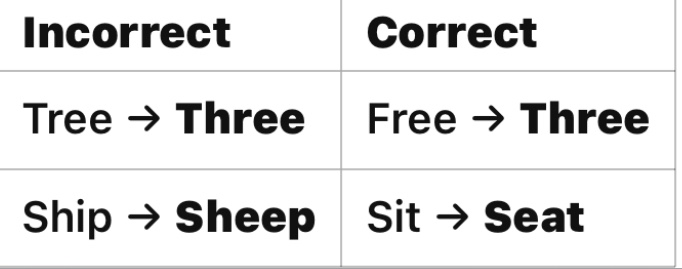
✅ Exercise: Repeat each pair slowly, then speed up.
2. Read Aloud with Emotion
Choose a paragraph and read it expressively. Try:
• Reading slowly with clear stress
• Adding intonation for natural speech
3. Record & Compare
• Record yourself speaking and compare with native speakers.
• Focus on pronunciation, fluency, and stress.
How Lingua Lab Helps You Master Pronunciation & Fluency
At Lingua Lab, we provide expert coaching for IELTS, PTE, OET, TOEFL, CELPIP, and Duolingo, focusing on:
✅ Personalized feedback on pronunciation mistakes
✅ Live interactive practice for fluency improvement
✅ AI-based tools for accent reduction
✅ One-on-one mock speaking tests
Why Choose Lingua Lab?
⭐ Best online spoken English institute
⭐ Certified trainers for all English proficiency exams
⭐ Flexible learning schedules
⭐ Real-life speaking practice with feedback
Get a High Score in Your Speaking Test!
Join Lingua Lab today for the best online spoken English classes and master pronunciation & fluency for IELTS, PTE, OET, TOEFL, CELPIP, and Duolingo.
Book Your Free Demo Class Now!







Leave a comment